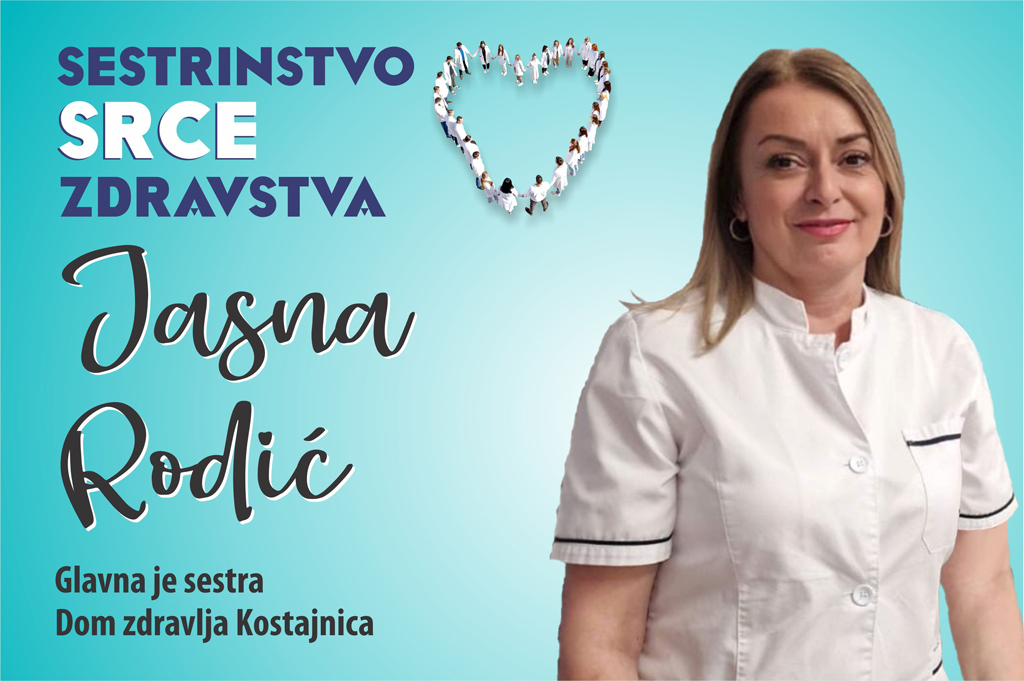
Jasna Rodic is Head Nurse and Quality Coordinator at the Primary Health Care Center Kostajnica. Many years of work at the emergency medical service and health management, made her grow into a recognizable authority in the field of nursing and nursing management in local community.
When did you start your career and what motivated you to choose this particular profession? I started my career at the age of 19 at the Emergency Medical Service, where I worked for 15 years. After graduating from Nursing Faculty and completing four modules of Management in Health, I have been appointed Head Nurse of Primary Health Care Center Kostajnica. I chose this profession because of the unique combination of humanity and expertise that it requires. A nurse is the bridge between the patient and the healthcare system – both an expert and a support. That role in which I can provide both knowledge and warmth was crucial for me.
What does your typical workday look like? As the Head Nurse of a primary health care center, I organize, supervise, and manage the work of all departments. I start the day reviewing situation in the outpatient clinics, scheduling staff and coordinating the family medicine, community nursing and emergency services teams. I supervise the work of nurses and support staff. I adjust activities according to the prepared schedule, but also to unexpected situations, because the job of a head nurse is dynamic and unpredictable. I am in charge of administration, reports, supply of consumables, and medicine and equipment quality assurance. I actively participate in staff training, onboarding and resolving organizational challenges. I collaborate with management, run health prevention programs, communicate with patients and the local community, teach nursing at the nursing high school and teach practical classes at the primary health care center. At the end of the day I usually analyze what has been done and prepare a plan for the next day.
What skills do you consider key to successful work performance in this profession? The most important skills of a head nurse are expertise – medical knowledge, following protocols and supervising patients; organizational skills – planning shifts, distributing tasks and managing resources; leadership and communication – motivating the team, mentoring and collaborating with colleagues and management; problem-solving skills – responding quickly to emergencies and unforeseen situations; empathy – understanding patient’ needs and supporting staffs.
How important is the Nursing Registry and where do we stand with the registration process? The Nursing Registry is an extremely important tool for the further development of this profession. It is a database of all nurses – containing not only figures, but also nurses’ professional qualifications and competencies. This is important for nursing services standardization and planning of further development. At the Primary Health Care Center Kostajnica, all nurses are duly registered in the Registry.
What are the greatest challenges in the institution you work at and what would you like to improve? Primary Health Care Center Kostajnica is committed to constantly improving the quality of work and services. I believe that we could make an additional step forward organizing more training for health professionals in the areas of communication, public speaking and management, since these skills are not acquired through formal education, but are of great importance in everyday work.
How to stop nurses’ outflow from Bosnia and Herzegovina? There are several key factors that could contribute to reducing the outflow of staff: increase salaries and introduce incentives; improve working conditions - fewer patients, modern equipment and safety; enable professional development - specializations, education and advancement; strengthen legal protection and standardize competencies, show greater appreciation for the profession.
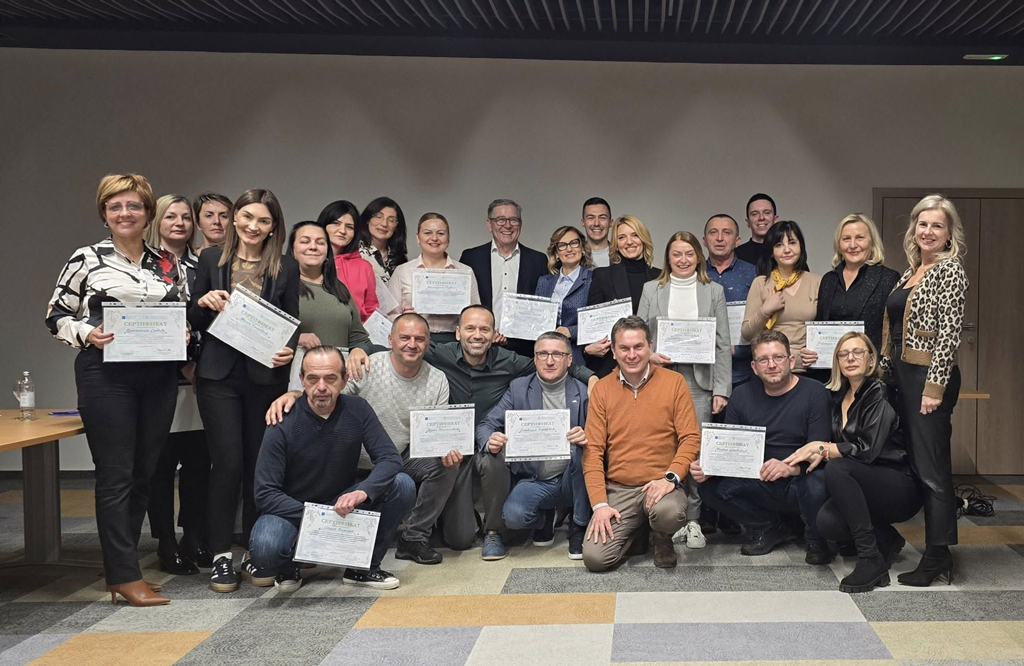
How do you improve your professional skills and how important is continuous education? Continuous education is our professional obligation. I undertake both professional and personal growth training. Thanks to the Government of Switzerland, Fami Foundation and the Ministry of Health and Social Welfare of Republika Srpska, I had the opportunity to attend training in leadership, management, andragogy, public speaking and communication. All of afore mentioned helped increase my confidence and readiness to face the challenges of this profession.
What experience from your career do you particularly appreciate? I believe that every job in healthcare is equally important and that we are strong as much as our weakest link is. The Emergency Medical Service, where I spent a huge part of my career, holds a special place in my professional life. A fine line between life and death is witnessed every day in EMS and only then does one fully understand how crucial expertise, speed, and composure are.
A message to future nurses... Choosing a nursing profession means being with people in their most difficult moments, providing care, understanding and hope. It is a job where your knowledge, abilities and attention can save lives, ease pain and bring a smile. If you want a career that is challenging, rewarding and fulfilling this is a vocation that will leave a lasting print both on the lives of others and on your own.